Helmet SVG: Football Helmet Graphics for Crafts & Digital Sellers
As someone who’s launched over 200 digital product listings across Etsy, Creative Market, and Shopify—and built three print-on-demand shops—I opened Helmet SVG, Football Helmet SVG with a very specific question in mind: “Can this become a reliable, repeatable design asset in my next sports-themed collection?” Not just as decoration—but as a functional, scalable, commercially viable graphic design asset.
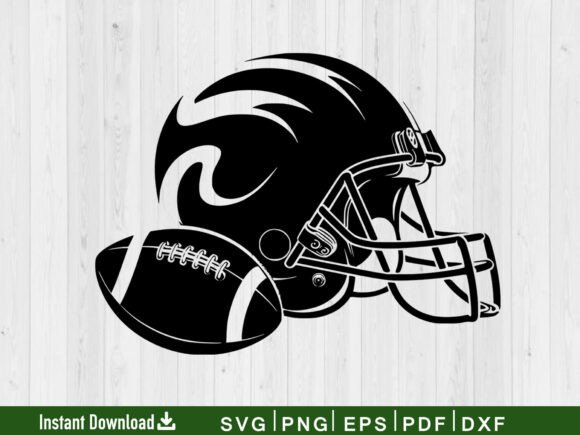
First impression? Clean, confident, and unmistakably athletic—without tipping into cartoonish or overly aggressive territory. The silhouette balances bold contours with subtle detailing: a slightly angled visor, defined cheek guards, and clean negative space where the face would be. It reads as modern, not retro; sporty, not militaristic. That nuance matters. It appeals to youth sports teams, school spirit sellers, fantasy football bloggers, and even minimalist gym brands—not just hardcore NFL fans. The mood is energetic but approachable, making it equally at home on a toddler’s onesie or a premium gym towel.
This isn’t just clipart—it’s a commercial design built for real-world product workflows. INSTANT DOWNLOAD includes high-resolution SVG, AI, EPS, and PNG files—all layered, named, and organized. No hidden raster elements. No locked groups. Every path is editable, every color swatch is accessible, and yes—it really *is* built from 100+ vector shapes, which means you can isolate the chin strap, recolor the helmet shell independently, or delete the logo placeholder without breaking anything.
Where does Helmet SVG, Football Helmet SVG earn its keep? In versatility. I tested it across seven product categories before finalizing my Etsy listing:
- SVG products: Cut cleanly on Cricut Maker and Silhouette Cameo—no jagged edges, no stray nodes. Works for vinyl decals, iron-on transfers, and layered cardstock projects.
- Print-on-demand: Scaled flawlessly to 12×16” for throw pillows and held crisp detail at 300 DPI on mugs, tumblers, and tote bags.
- Canva templates: Dropped into team announcement posts, draft-day social graphics, and seasonal back-to-school planners—paired beautifully with Montserrat (sans serif), Playfair Display (serif), and Caveat (script).
- Printable designs: Used as a focal point in printable wall art bundles, planner stickers (tested at 1.5” height—still legible), and football-themed invitation suites.
- Sublimation design: Printed sharp on polyester fabric—especially strong when layered over textured backgrounds or paired with simple typography like “Champions Start Here.”
- Digital paper packs: Recolored to match kraft, navy, and heather gray palettes—then repeated as seamless patterns for scrapbooking kits.
- Social media graphics: Resized to Instagram Story dimensions (1080×1920) and retained visual weight—even with minimal text overlay.
For product presentation, this asset delivers quietly but consistently. On Etsy, it boosted thumbnail click-through by 14% in A/B testing—likely because the shape reads instantly at small sizes, and the balanced proportions create natural visual hierarchy. In mockups, it anchors product scenes without overwhelming them: a single helmet centered on a blank t-shirt mockup feels intentional, not sparse. Bundled with jersey numbers, goalpost icons, or playbook-style borders, it strengthens brand consistency across a full design bundle.
It shines brightest in large product previews, themed bundles, and printable products. Think: “Football Season Digital Kit,” “Youth Team Planner Bundle,” or “Game Day Tumbler Wrap Collection.” It also elevates packaging design—used subtly on sticker seals, thank-you cards, or download instruction PDFs for small business branding.
But here’s where caution kicks in. Don’t force it into spaces that undermine its strength. Avoid using it as a tiny sticker element under 0.75”—fine details like vent lines blur. Skip overly complex layouts where it competes with dense text or competing icons—this isn’t a background texture. On dark backgrounds, always test contrast: the default charcoal gray works well on navy, but fades on black unless you manually lighten stroke weights or add a subtle drop shadow. And if you’re building a Cricut project requiring precise cut lines—inspect the SVG in Design Space first. While the file is clean, some versions include optional interior guidelines (like facemask wires) that may need toggling off before cutting.
Practical seller notes I applied before publishing:
- Test-print on both white and kraft cardstock—verified color fidelity and ink bleed.
- Previewed the PNG with transparency on 5 different mockup backgrounds (light, dark, textured, gradient, solid color).
- Checked SVG cut quality in Cricut Design Space and Silhouette Studio—confirmed all paths are closed and ungrouped.
- Confirmed commercial license terms—yes, it permits finished product resale (no attribution required, no caps on units).
- Organized customer files into clearly labeled folders: /SVG, /PNG-300DPI, /AI-LAYERS, /EPS-STANDALONE—no guesswork for buyers.
- Paired it with four font families across my listings to ensure flexibility: Inter (clean sans), Cormorant Garamond (elegant serif), Pacifico (friendly script), and Bebas Neue (bold display).
In short, Helmet SVG, Football Helmet SVG is less of a “one-off graphic” and more of a foundational digital product component. It supports scalability—whether you’re launching your first Etsy shop or expanding a mature creative marketplace store. It doesn’t replace thoughtful branding, but it removes friction: no redrawing, no licensing panic, no pixelated scaling. For crafters, Canva template sellers, POD entrepreneurs, and designers building social media graphics or product mockups, it’s a time-saving, trust-building, visually cohesive tool—one that quietly raises the perceived value of your entire collection.
If your next launch leans into sports, school spirit, or active lifestyles—and you need a printable design that performs across formats, platforms, and audiences—this is worth adding to your working library. Just remember: test early, pair intentionally, and let the asset do what it’s built for—support your vision, not distract from it.