Football Player Line Drawing Vectors
A Clean, Confident Silhouette—Not Just Another Sports Clipart
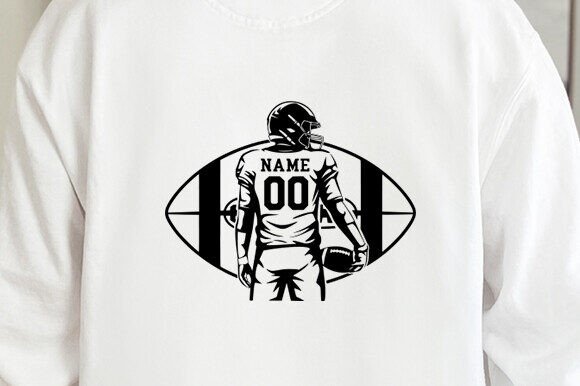
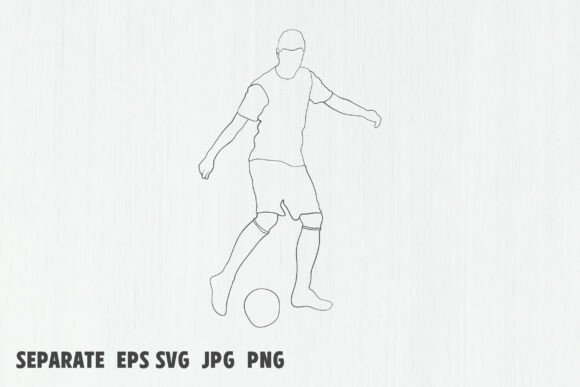
First glance at Football Player Line Drawing Vectors tells me this isn’t a cluttered, over-rendered mascot or a cartoonish caricature. It’s a single, continuous line drawing—fluid, intentional, and surprisingly expressive. The pose suggests motion: one foot grounded, arm raised mid-celebration, helmet tilted just enough to imply energy without sacrificing clarity. There’s no shading, no gradients, no distracting details—just confident contour. That’s exactly what I look for when choosing embroidery-ready graphics for real projects.
Why This Works So Well on Embroidered Tote Bags (and Why It Might Not on Baby Onesies)
Last week, I prepped a custom embroidered tote bag for a local high school’s alumni weekend—simple cotton canvas, medium-weight stabilizer, 4” hoop. I loaded the SVG version of Football Player Line Drawing Vectors into my digitizing software and ran a quick running stitch conversion. The result? Crisp, legible, and unmistakably athletic—without looking like clipart. Customers loved how clean it looked next to monogrammed initials on the strap.
But here’s where judgment matters: I *didn’t* use it for baby onesies. Why? Even though the vector is scalable, the line weight stays consistent—and on ultra-fine knit fabric, that same confident stroke can read as heavy or rigid. On stretchy, thin cotton jersey, the lack of internal structure in the design means it won’t “breathe” with the fabric the way a purpose-built appliqué design would. For baby embroidery, I’d want softer curves or intentional negative space—this one shines best on stable, medium-to-heavy fabrics.
Real-World Fit: Where This Design Earns Its Keep
- Sweatshirt embroidery: Perfect for left-chest placement—minimal stitch count, strong visual impact, reads well even from across a gymnasium.
- Embroidered patches: The clean outline translates beautifully to satin-stitched borders. No risk of fill-stitch bleeding or detail loss at small sizes.
- Tote bag design & aprons: Holds up at 3–4 inches wide without thinning out or becoming fragile-looking.
- Holiday embroidery & personalized gifts: Paired with a simple “Go Team!” or graduation year in a clean sans-serif, it feels celebratory but not childish.
- Craft business & Etsy seller assets: As a digital embroidery file, it’s versatile—you can offer it as-is for machine use, or layer it into printable mockups for listings without needing extra illustration work.
Where to Proceed With Care
This isn’t a one-size-fits-all embroidery file—and that’s okay. Football Player Line Drawing Vectors needs thoughtful placement and context. Avoid it on:
- Curved surfaces like caps: The continuous line doesn’t adapt well to crown curvature without manual redrawing or careful digitizing adjustments.
- Dark fabric without contrast testing: Since it’s a line drawing, thread color choice is critical. A navy sweatshirt with light gray thread might vanish—always test black/white mockups first.
- Dense layered garments (e.g., quilted jackets): The design lacks interior detail, so it won’t compete visually with texture or stitching elsewhere on the garment.
- Products requiring frequent washing: Running stitch lines hold up well—but only if properly stabilized. Don’t skip cutaway or tear-away backing on terry cloth or toweling.
What This Design Says About Your Brand—Before a Single Stitch
Using Football Player Line Drawing Vectors signals intentionality. It says you value clarity over clutter, craftsmanship over convenience. When customers see it on a boutique sweatshirt or an embroidered kitchen towel, they don’t think “generic sports graphic”—they sense a handmade product with quiet confidence. That perception lifts perceived value, supports brand consistency for small shop owners, and increases buyer engagement, especially among teens, coaches, alumni, and gift buyers who appreciate subtlety.
It also builds trust. Because the design avoids novelty tropes (no footballs bursting through letters, no exaggerated muscles), it feels authentic—not like a trend you’ll retire next season. That longevity matters for craft businesses building repeat customers.
Practical Embroidery Designer Notes You’ll Actually Use
- Always test on scrap fabric first—especially if pairing with textured weaves or dark backgrounds.
- Review stitch density in your embroidery software. A pure running stitch version will be lightweight; adding subtle satin-fill to the helmet or jersey number area boosts dimension without overloading.
- Confirm hoop size compatibility. At 5” wide, it fits standard hoops—but check your own workflow before committing to production runs.
- Inspect corners and tight curves manually. Some auto-digitizing tools oversimplify sharp angles—zoom in and adjust tension points if needed.
- Use proper stabilizer. Medium-weight cutaway works best for knits; tear-away suffices for stable cottons and canvas.
- Check licensing before selling finished items. These are digital embroidery files—confirm whether commercial use is permitted for your intended application (e.g., selling embroidered patches on Etsy).
- Compare light/dark fabric backgrounds in mockups. A design this minimal lives or dies by contrast.
Final Thought: A Design That Serves the Project, Not the Other Way Around
Football Player Line Drawing Vectors isn’t flashy—but it’s reliable. It doesn’t shout. It stands. In a market saturated with overdesigned Crafts and Graphics, it’s refreshing to find a vector that respects the embroidery process: no unnecessary detail to digitize, no fragile elements to break under needle stress, no visual noise competing with fabric texture or garment shape. Whether you’re prepping a holiday embroidery run, building a small shop’s seasonal collection, or creating a personalized gift for a lifelong fan, this is the kind of design that disappears into the work—and makes the finished product feel intentional, polished, and human-made.